The fashion world is abuzz with the news that Topshop, once the undisputed king of the
British high street, is getting another shot at a revival. With its ownership now split and a new
creative direction on the horizon, the talk in fashion circles is all about whether the brand can
recapture its 90s magic.
But this isn’t just a story about one retailer; it’s a reminder that fashion is cyclical and that the
trends we’ll be seeing for Autumn 2025—from quiet luxury to minimalist chic—all have roots
in the past. This piece delves into the archives to show you how to shop like a true insider,
exploring the architects of our favourite brands, the lessons they offer, and the specific
vintage pieces you should be hunting for to nail this season’s look.
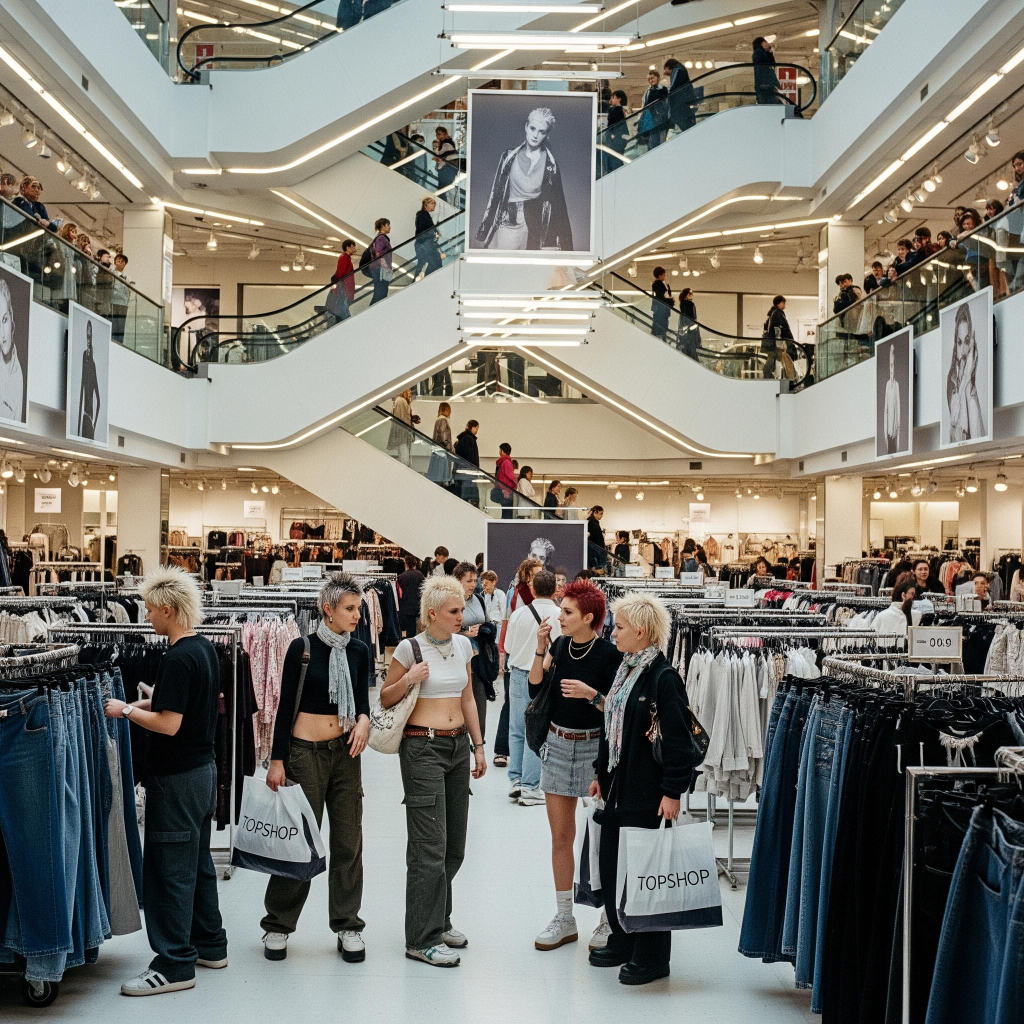
Topshop’s story is one of constant reinvention. Its latest chapter, however, is a clear reminder of the challenges facing modern retail. As reported by The Guardian way back in 2024, ASOS announced the sale of a 75% stake in the brand to the Danish fashion group, Bestseller. This move, which netted ASOS £135m, was primarily a financial one, aimed at reducing the company’s significant debt. ASOS will continue to sell Topshop on its site but will now pay a royalty fee, a decision that analysts say will likely dent its profits.
This is not the first time Topshop has undergone a major transformation. In the 1970s, it was not considered a “cool” brand, originally starting life as a spin-off from Peter Robinson, a department store. Its rival, Chelsea Girl (now River Island), was the more fashionable choice. Its journey to becoming a cultural powerhouse was a slow but deliberate one, a testament to the fact that rebirth is a consistent theme in its history.
Topshop’s golden age, however, arrived in the 1990s and early 2000s under the leadership of Brand Director Jane Shepherdson. Before joining Topshop, Shepherdson worked her way up through the Burton Group, starting as a warehouse picker and then a buyer for the jersey department. This hands-on experience, coupled with a deep-seated passion for fashion, gave her a unique insight into what customers truly wanted.
After leaving Topshop in 2006, she became CEO of the contemporary British brand Whistles, which she successfully revitalised. Today, Shepherdson is the chair of My Wardrobe HQ, a luxury fashion rental platform, and an honorary professor at Glasgow Caledonian University, focusing her efforts on sustainability and circular fashion models.
Shepherdson’s strategies were transformative:
● Elevated Collections: She refined and elevated the brand’s aesthetic, using quality fabrics and a keen attention to detail that set it apart from its high-street rivals.
● Pioneering Collaborations: Under her leadership, Topshop was a key sponsor of the British Fashion Council’s NewGen initiative, launching the careers of now-household names like Christopher Kane and Mary Katrantzou.
● Experiential Retail: Long before it was a buzzword, Shepherdson’s Topshop offered an immersive shopping experience. The flagship Oxford Circus store became a destination with vintage sellers, upcycled pieces, and a nail bar.
Shepherdson’s departure in 2007, reportedly over disagreements with owner Philip Green about the Kate Moss collaboration, marked the beginning of the brand’s decline. The brand lost its creative soul, its unique point of view, and its connection to the customers who had made it a success.
Topshop’s latest ownership change marks yet another chapter. While a new visual identity and a focus on quality and inclusive sizing have been implemented by ASOS, to truly replicate its 90s relevance, experts suggest it needs to do more than just exist as an
online-only label.
● Re-imagining the Physical Experience for a New Generation: Gen Z and Gen Alpha, who grew up with seamless online shopping, are paradoxically leading a revival of physical retail. For them, a store is not just for transactions; it’s a “third space” after home and school, a place to gather, socialise, and create content. A modern Topshop needs to go beyond a mere retail space and become a cultural hub once more, offering immersive and tech-enabled experiences that are inherently shareable. Imagine interactive art installations, in-store workshops with influencers, or even a branded podcast studio.
● Authentic Influencer Engagement: Instead of generic partnerships, the brand needs to connect with creators who feel authentic to its new-old identity, tapping into the hyper-speed, creator-driven culture of today.
● A Creative Director with a Vision: The brand needs a strong creative director to give it a distinctive “je ne sais quoi.” It can’t just chase trends; it needs to set them again. The right creative vision will ensure the brand builds on its heritage rather than just copying it. It’s all very well saying they need a new creative director, someone with a vision but who could take on this task? We propose Daniel Lee, Molly Goddard or Charles Jeffrey.
While his recent appointment at Burberry has him at a major heritage brand, a move to Topshop would be a left-field but strategically brilliant choice. Daniel Lee is a master of creating instantly recognisable products with high commercial appeal, something he proved
at Bottega Veneta with the “Pouch” bag and the viral “Bottega Green.”
His vision at Burberry is a love letter to British heritage, which is exactly the kind of brand storytelling Topshop needs. Lee’s ability to create a must-have product and his deep understanding of how to build a brand identity (even one as apathetic as Bottega’s social media blackout) would be invaluable.
He could give Topshop an entire new design language and a tangible reason for people to shop there, beyond just trends. The only question is can TS afford him? The answer, probably not.
A former Topshop NewGen designer herself, Molly Goddard‘s return to the brand would be a powerful narrative. Goddard is known for her instantly recognisable, hyper-feminine aesthetic defined by smocked tulle, vibrant colours, and oversized silhouettes. She is a designer who knows how to make clothes that are joyful, unique, and wearable, and she has a fiercely loyal following.
Her success comes from her ability to create a distinct, impactful look that is still accessible to a wide audience. Goddard’s leadership could provide Topshop with a new, youthful point of view that feels optimistic and creatively driven, moving it away from its past association with fast fashion and towards a more celebratory and individualistic style.
This is the choice for a Topshop that wants to be more of a cultural force than a commercial machine. As the creative mind behind Charles Jeffrey LOVERBOY, he is a true cultural curator with a flair for the theatrical. His work is a vibrant, chaotic, and inclusive celebration of London’s club culture and queer history. He’s a storyteller, and his shows are an experience, not just a presentation of clothes.
While his designs might seem too avant-garde for the high street, his vision could be instrumental in making a new physical Topshop store a cultural hub for Gen Z and Gen Alpha. Think less about replicating his exact designs and more about his ethos: creating a space that feels like a community, a gallery, and a brand all at once. He could be the creative director who makes Topshop relevant to an entire generation of young people who crave authenticity and community.

The fashion world is a symbiotic ecosystem. The revival of a heritage brand or the appointment of a new creative director to a luxury house often has a “drip-down effect” on the high street. The minimalist aesthetic, for instance, which is currently dominating the
runways and embodies the “quiet luxury” trend, has a direct lineage to the work of a few visionary designers.
One of the most influential was Jil Sander, whose work in the 80s and 90s defined the very idea of sophisticated minimalism. The clean lines, meticulous tailoring, and focus on high-quality fabrics that she championed are now being reinterpreted and sold in stores across the globe. By understanding the origins of these trends, you can become a more discerning shopper, capable of finding the high-quality vintage pieces that inspired today’s looks.
Beyond these new labels, classic British heritage brands are also experiencing a powerful rebirth. Think of the successful revivals of brands like Burberry under Christopher Bailey or Mulberry, which has been revitalised by designers who respect its core values while injecting a modern point of view. Hunting for vintage pieces from these heritage brands is a way to invest in timeless quality and a piece of fashion history.
To truly embrace this style, look for pieces from other influential British designers from the 80s and 90s who are often overlooked in the modern resale market:
Betty Jackson: Famous for her “directional classicist” approach. Betty Jackson’s designs from this era often feature loose, unstructured silhouettes in bold colours and patterns. Look for pieces in fine art-derived prints and unexpected fabrics. She also worked as a designer for the Quorum line of Ossie Clark in the 70s and was an assistant to Wendy Dagworthy. Katharine Hamnett: A powerful voice for political and environmental change, Hamnett’s most famous creations were her oversized, slogan T-shirts from the 80s, worn by pop stars like George Michael. But beyond the slogans, look for her early functional, unisex styles in fabrics like parachute silk, cotton jersey, and drill.
Wendy Dagworthy: An influential designer and academic, Dagworthy’s label was known for loose, unstructured garments with a focus on natural fibres like wool and mohair. Look for her circular skirts, oversized coats, and signature prints, including those done with Liberty. She also helped found the London Designers’ Collection in the 70s, which was the birth of London Fashion Week.
John Rocha: A highly respected Irish-born, UK-based designer, Rocha’s work from the 80s and 90s is known for its craftsmanship and romantic, hand-finished aesthetic. While he is often associated with his crystal homeware designs for Waterford, his clothing from this era is a true vintage find.
The clean, minimalist lines of 90s Jil Sander are a perfect fit for Autumn 2025’s aesthetic. Here’s what to look for when hunting for her iconic vintage pieces:
● The Label: For post-2000 pieces, look for a product code on the care label that begins with the full year (e.g., 2001) followed by a ‘1’ for Spring/Summer or ‘2’ for Autumn/Winter. Some later labels use an ‘I’ for *Inverno* (Winter) or an ‘E’ for ‘Estate’ (Summer).
● The Quality: Jil Sander is renowned for her use of high-quality fabrics. Look for impeccable construction, meticulous tailoring, and luxurious materials that feel substantial to the touch.
● The Product Codes: Jil Sander garments have specific brand identifier numbers, including RN 104642 and CA 3476. These numbers can be cross-referenced with online archives to help authenticate the piece.

The runways for Autumn/Winter 2025 showed a definitive shift towards a more lived-in elegance. Here’s what to look for, and how you can find these trends in the vintage and heritage markets.
Faux Fur: This trend continues to dominate the catwalks, with floor-length coats and cropped jackets in a variety of hues. To embrace this trend sustainably, look for secondhand faux fur coats from the 90s and early 2000s.
Knee-Grazing Skirts: The demure knee-length skirt is back, but it’s no longer corporate. It feels commanding and poised. Look for clean, A-line or pencil skirts in wool or silk from brands like Calvin Klein or Prada from the 90s, often styled with oversized knits or blazers.
Soft, Slouchy Bags: A throwback to the noughties, designers presented totes and cross-bodies in soft, supple leathers and suedes. Seek out vintage shoulder bags from brands like Bottega Veneta or even minimalist styles from the 90s.
Return to Brown: Earthy brown tones were the neutral of the season, seen on everything from shirting to outerwear. A vintage brown wool coat or a cashmere polo from Prada could be the perfect investment piece.
Shoe Trends: For Autumn 2025, think of a modern twist on collegiate and preppy footwear. Look for loafers and brogues with exaggerated, elongated toes, or invest in a pair of statement knee-high boots. Another key trend is the re-emergence of wedges, and the simple clog has been given a high-fashion makeover.
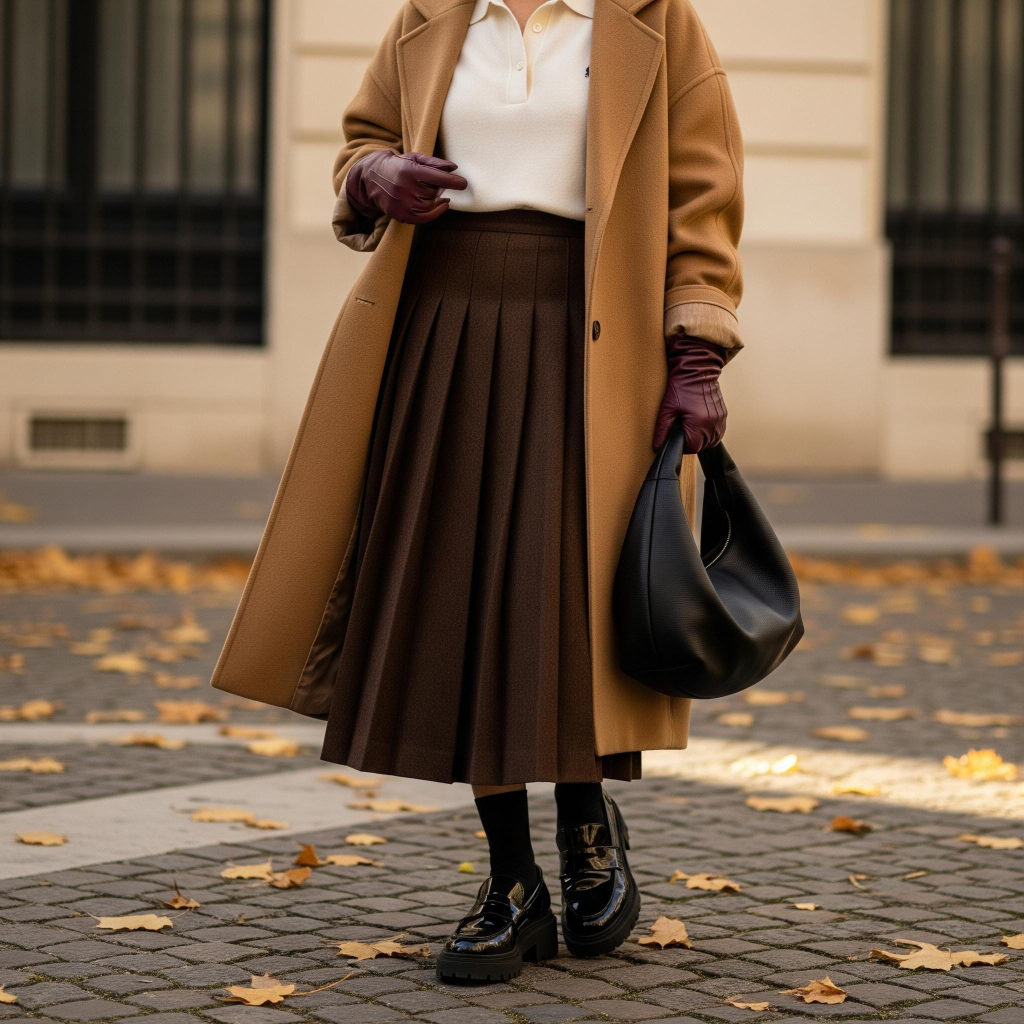
Imagine a look that effortlessly merges comfort with quiet confidence. A vintage, oversized camel-coloured coat from the early 90s, perhaps a Max Mara or a high-quality find from a charity shop, is draped over a simple white cashmere polo. The polo is tucked into a knee-grazing, pleated wool skirt in a deep chocolate brown, echoing the season’s key neutral. On her feet are chunky black patent leather loafers with a subtle, elongated toe—a nod to the modern collegiate trend.
She carries a soft, supple leather slouch bag, big enough for her daily essentials, and, as a subtle nod to the season’s left-field prediction, she wears a pair of slouchy plum-coloured leather gloves, adding an unexpected pop of colour and a touch of effortless cool.
The joy of vintage shopping lies in the hunt. While sites like eBay and Vinted are great for bargains, there are also a number of specialist sites that do the curating for you:
Vestiaire Collective: Europe’s largest resale site for authenticated luxury fashion, perfect for finding pieces from designers like Jil Sander.
Beyond Retro: A UK treasure trove for vintage and secondhand clothing, with a focus on specific eras and styles.
ASOS Marketplace: An online platform for independent vintage boutiques and emerging brands.
Shush London: A specialist preloved designer and luxury fashion store with both a physical shop and an online presence, offering authenticated pieces from high-end labels.
Beyond these sites, explore your local charity shops and consignment stores. The best finds often come from unexpected places. Always check the labels for fabric composition (look for natural fibres like wool, silk, and cotton), inspect seams for quality, and look for signs of
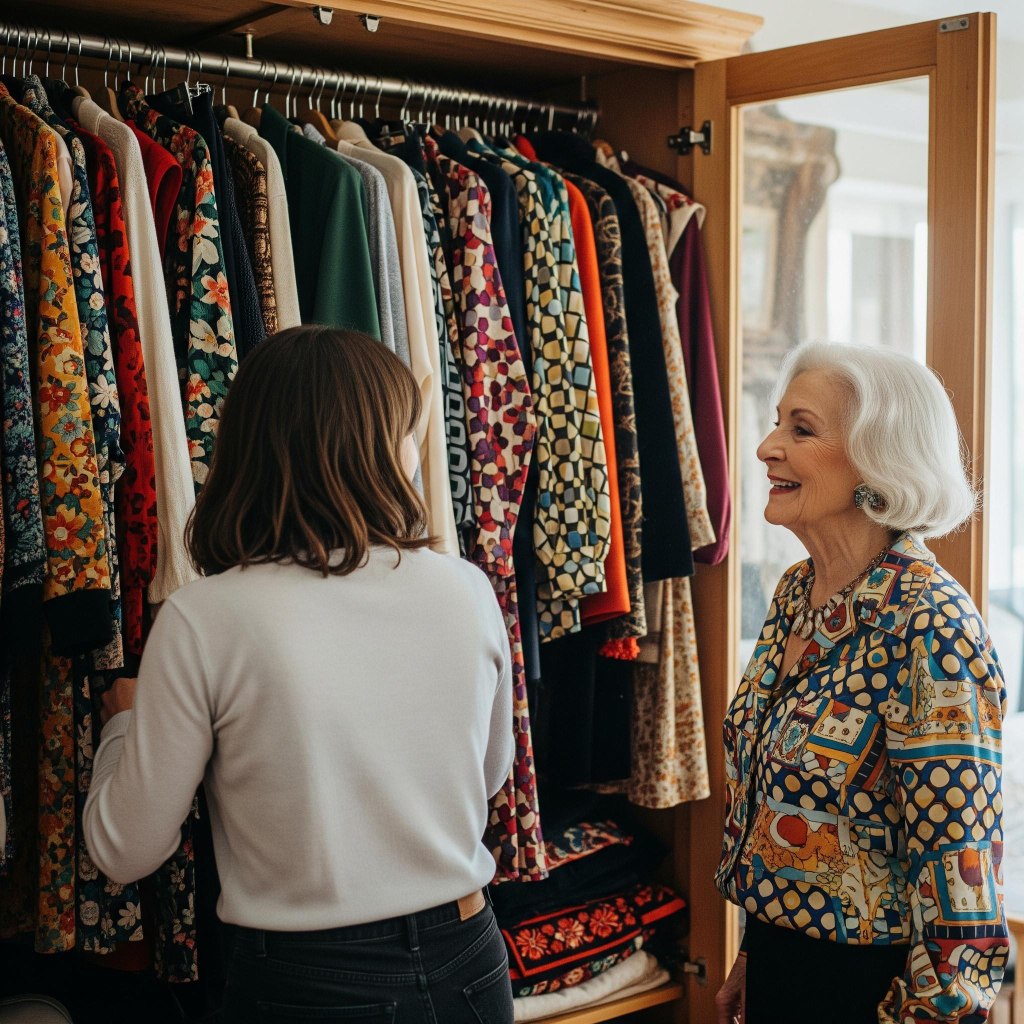
hand-finishing. Lastly the best place of all for vintage finds, your mum’s, aunt’s or gran’s wardrobe – usually they don’t charge but after reading this piece they just might!
By Victoria Walsh