
It’s easy to feel the pressure in the competitive world of e-commerce. You’ve got a fantastic product, a sleek website, and you’re ready to get in front of your customers. So you turn to Google Ads, a powerful tool that, when used correctly, can supercharge your sales.
However, we’ve seen countless brilliant businesses pour money into their campaigns, only to see disappointing results. If you’re feeling this frustration, you’re not alone. The truth is, many e-commerce businesses are making the same critical mistakes that turn a potential profit into a wasted expense.
The goal is not just to get clicks, but to generate real, tangible profit. Let’s explore five of the most common mistakes we see, and how you can fix them to build a robust and successful Google Ads strategy.
This is perhaps the most fundamental and costly mistake an e-commerce business can make. You’re running ads for a new range of trainers, but you’re getting clicks from searches like “how to clean trainers” or “best running trainers for marathon training”. These searchers have no intention of buying anything right now. They’re simply looking for information. Each one of those clicks is a wasted ad pound that could have gone towards a potential customer. It’s like paying to have your shop sign seen by people who are just passing by and have no interest in coming in.
How to Build a Robust Negative Keyword List
The solution lies in a thorough search term analysis. This is a powerful, yet often overlooked, part of campaign management. You need to dive into the ‘Search Terms’ report in your Google Ads account to see the exact queries that triggered your ads. From this list, you can identify irrelevant terms and add them to your negative keyword list. For example, if you sell new shoes, you might add negative keywords like “second hand,” “used,” “repair,” or “free.” This simple, proactive task will dramatically improve your campaign’s efficiency by preventing wasted clicks from low-intent searches and focusing your budget on the people who are actually ready to buy.

You’ve done the hard work of creating a compelling ad that a user has clicked. Now what? You might think your job is done, but the journey has only just begun. The landing page—usually a product page or category page is where the sale is won or lost. If a user arrives and is met with a slow, cluttered, or confusing page, they will leave in a matter of seconds. All that ad spend used to get them there is instantly wasted. We’ve seen businesses with fantastic ad campaigns fail because the landing page acted as a “leaky bucket,” allowing potential customers to simply fall away.
Optimising Your Landing Pages for Conversions
Creating a seamless user experience is paramount. Your landing page must be a logical and frictionless continuation of your ad. Ensure you have a clear and prominent Call to Action (CTA), such as “Add to Basket” or “Buy Now,” that stands out and is easy to find.
The page should load incredibly fast; in today’s mobile-first world, slow load times are a guaranteed conversion killer. It must also be mobile-friendly, as a significant portion of e-commerce traffic now comes from smartphones. Finally, include high-quality images and clear, benefit-driven product descriptions to answer any questions a potential customer might have. The goal is to make the purchasing decision as easy and obvious as possible.
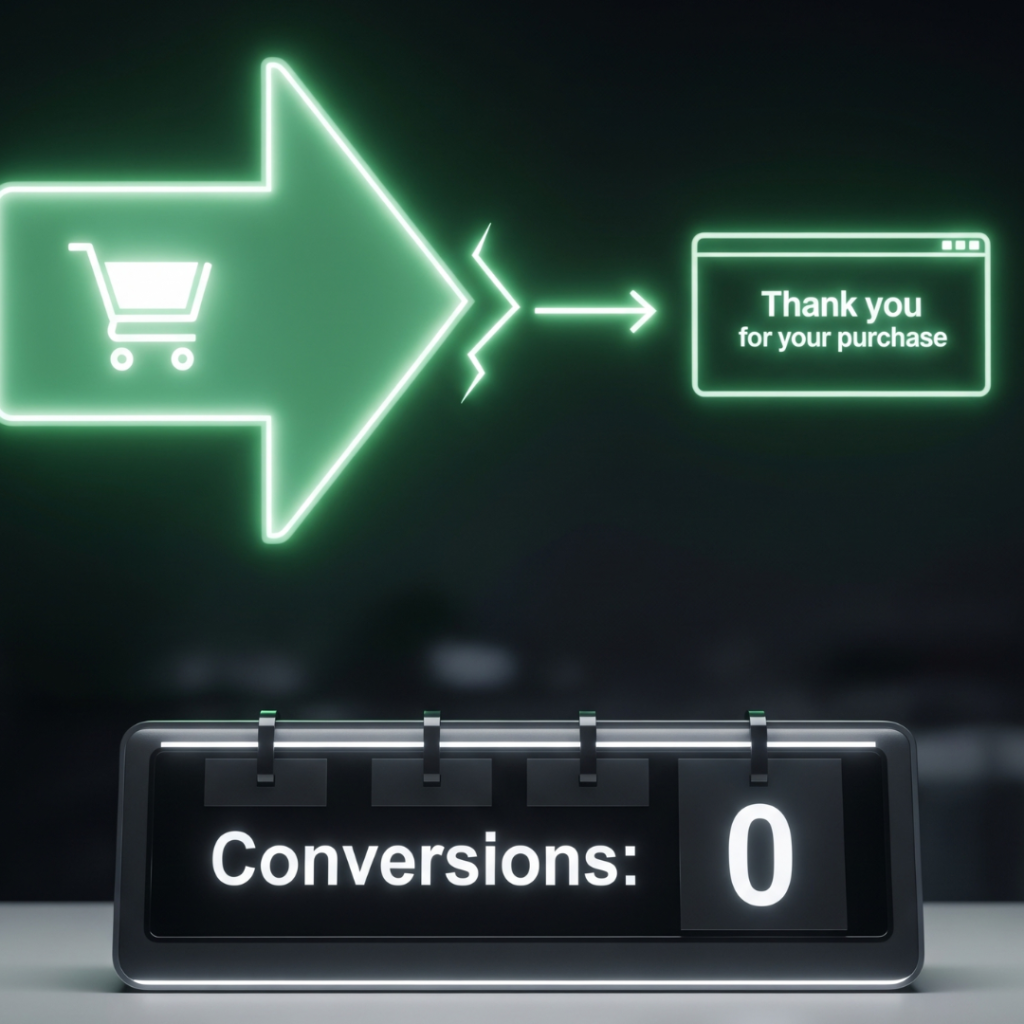
This is a technical but absolutely vital mistake. If you don’t have accurate conversion tracking set up, you are flying blind. You have no way of knowing which keywords, ads, or campaigns are actually generating sales. You might be spending all your money on a campaign that appears to be working because it’s generating clicks, when in reality, it’s not delivering a single conversion. Without proper tracking, every optimization decision you make is based on guesswork, not data.
The Vital Role of Accurate Conversion Data
The most common tracking mistake is improper setup of the conversion tag. This can lead to under-reporting, where you are missing sales data, or over-reporting, where every click is counted as a conversion. The result is a skewed view of your campaign’s performance, which can derail your entire strategy. Proper conversion tracking allows you to see exactly which products and ads are contributing to your bottom line. It allows you to bid more aggressively on what works and pause what doesn’t, turning your Google Ads account from a guessing game into a precise, profit-driven machine. To ensure your data is always accurate, you might want to consider working with a partner who can provide a comprehensive technical setup.
Google Ads is a living, breathing ecosystem, not a “set it and forget it” tool. We often encounter businesses that launch a campaign and then check back in a month later, wondering why it hasn’t worked. The online marketplace is constantly changing, with new competitors, seasonal trends, and shifts in consumer behaviour. An ad that performed brilliantly in January might be a complete failure by July.
The Importance of Regular Monitoring and Testing
Successful Google Ads management requires regular attention and refinement. You must consistently monitor your campaign’s performance, making bid adjustments to ensure you’re not overpaying for clicks. Ad copy testing is also crucial. By running multiple versions of your ads, you can see which headlines, descriptions, and calls to action resonate best with your audience. This process of constant iteration and optimization ensures that your campaigns remain relevant, competitive, and profitable. It’s a marathon, not a sprint, and a hands-on approach is the only way to win.
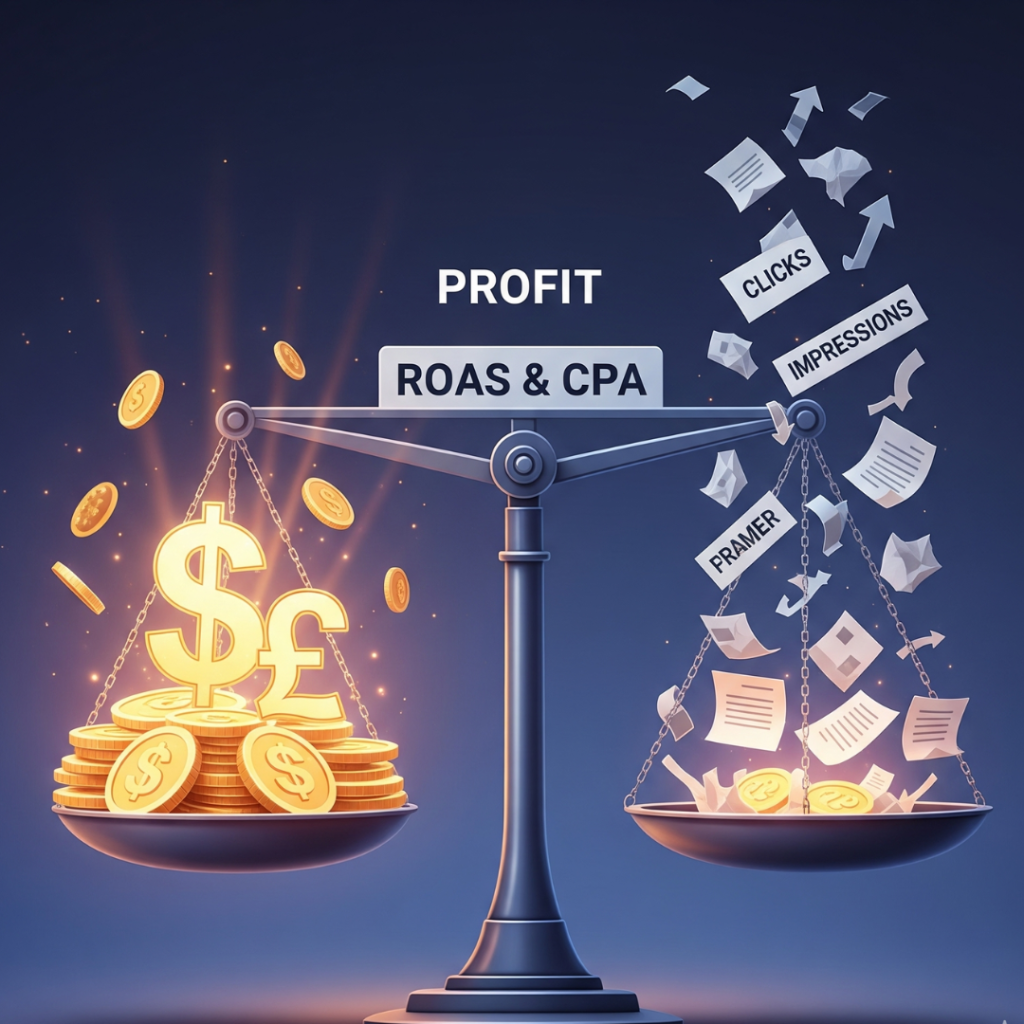
Too many e-commerce businesses fall into the trap of focusing on vanity metrics. They’re thrilled to see a high click-through rate (CTR) or a huge number of impressions. While these metrics can offer some insight, they don’t tell the full story. A million clicks that don’t lead to a single sale are completely worthless. The true measure of a successful e-commerce campaign is not how many people saw your ad, but how much money you made from the people who did.
Shifting Your Focus to ROAS and CPA
The most profitable e-commerce businesses measure their success by Return on Ad Spend (ROAS) and Cost Per Acquisition (CPA). ROAS tells you the revenue generated for every pound you spend on ads. A ROAS of 4.0 means you’re making £4 for every £1 spent. CPA tells you how much it costs to acquire a single customer. These are the metrics that matter because they directly relate to your bottom line. By optimising your campaigns around these metrics, you can confidently scale your ad spend, knowing that every additional pound is contributing to your profit.
Navigating the complexities of Google Ads can feel overwhelming, but by avoiding these common mistakes, you’re already on the path to building a more profitable and sustainable business. For a free Google Ads audit click here.